Volume I, Chapter One:
“In The Beginning was: The Daring Young Man on the Flying Trapeze.”
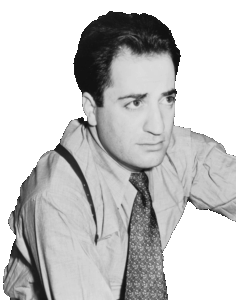 This short story marks Saroyan’s entry into the great scene of American literature. The analysis and the interpretation of signs will demonstrate how themes present in this narration will be revealed in Saroyan’s future writings. A number of themes will emerge that are closely associated to writer’s personality: laughter, image and painting, music and aesthetic of writing, silence, the symbolic of water and issues related to minorities. The importance of biblical inspiration, transcendental outlook, initiation to death through the metaphoric death of the protagonist and hence the ultimate importance of ontology of death in Saroyan’s narrations. In other words, writing will become the space of death where being and non-being will be discoursed. In this respect, this text is considered as the founding piece of Saroyan’s literary outlook: a manifest of his work in progress.
Volume I, Chapter Two:
“Sleep Wakefulness: The converging point of an existential quest”
The Daring Young Man on the Flying Trapeze” develops under two distinctive headings:
I.SLEEP,
II: WAKEFULNESS.
This succession of day/night, sleep/wakefulness will repeat indefinitely with each rotation of the earth around its orbit. However, further readings of Saroyan works will indicate that the dichotomy will repeat itself in his short stories, novels, autobiography, essays and plays; sleep/wakefulness associated to dream, is not just a passing allusion but an important entity in understanding of Saroyan’s work. The research studies first the approach of writers and thinkers who have dealt with the same issue. And then concentrates on Saroyan’s motivation and the place that this dichotomy in writer’s identity.
Volume I, Chapter Three:
“The Writer Confronts the Great Depression”
The research will expose crucial elements that characterize this historical period in America’s social and political life. The country was in political and economic turmoil. The devastating effects of the Great Depression due to the bank crash of October 1929 had their repercussions on different classes of American society. Saroyan’s writing is a reflection of this period and had great repercussions on his writings. However, this aspect was underestimated by critics; our undertaking illustrates how Saroyan has dealt radically with the reigning social disorder. He offered people hope, optimism and determination for better days when people were totally desperate.
Volume I, Chapter Four:
“Myself upon the Earth”: The shaping of the generative self
The research undertakes the analysis of this short story to question the use of the first person “I” in Saroyan’s writing. The self is a restricted entity in space and time, a unified being which is the source of consciousness. The question of selfhood dealt at this point is the writer’s self, namely that of William Saroyan. The “self” is closely associated with another entity, that of the subject and the implied “I”. It is writing that produces the “I” and is engendered by it, the “I” as subject and subjective knower and the self as an object that is known. In point of fact what is concerned is the narrative self the writer projects in his writings.
Volume II, Chapter Five:
“The Master Short Story Writer”

This chapter, studies three short stories in the language of being: “A Cold Day”, “Three Stories” and “Fight Your Own War”. The common point that associates these stories is the concept of being. In very simple words, the stories assert the primordial meaning of existence: to be. The research studies in what sense “being” is employed. The term appears at different appropriate points in the development of the story; as is the case with the hard times of the prevailing social conditions. The next three stories that will be analyzed in the present study, come from the volume of short stories entitled, My name is Aram. These are generally known by researchers and critics under the category of the Aram stories. They are “Journey to Hanford”, “The Poor and Burning Arab”, “The Pomegranate Trees” (stories on childhood adventures and immigrants’ life). These short stories tell much about the habits and outlook of an ethnic community. How adventurous mad big mouth uncles face the world and Western pragmatic efficient society.
Volume II, Chapter Six:
The Writer through the Representation of the Assyrian.
Nine out of the twenty-six short stories that comprise the volume of The Daring Young Man on the Flying Trapeze, have the writer as the main protagonist of the narration; “Seventy Thousand Assyrians” is one of them. It is through use of the first person that many novelties in terms of short story writing and style are revealed. In this narration, the “I” will unfold the archetypes that form its entity, not to mention the writing technique. Assyria is associated to the tower of Babel and the confusion of languages. When language was given to man by God, it was transparent that names were “lodged” in the things that were designated, such as the strength which is written in the body of a lion. In this story, the writer is in quest for his writer’s singular authentic identity. The Assyrian deals with deep identity conflicts of an Assyrian/Scottish writer who refuges in Portugal, drinks, gambles and questions about the quality of his own writing. Confronted to all these conflicts, the writer re-establishes his personality through a mystic bond between his ancestors and descendants, and a transcendent identity that cannot be altered by circumstances; decides to go to the home of his ancestors: Mesopotamia in Iraq.
Volume II, Chapter Seven:
“The Questioned Concept of Home”
The reflections undertaken in this chapter involve a series of notions that are closely associated with the terms: Emigrant and immigrant, refugee, the unrooted, the uprooted, exile, the exiled, home, homesickness, nostalgia and expatriate, ethnic community. From the point of view of significance, there are subtle differences in meaning that distinguish one term from the other. Underlining that one meaning implies and includes another, or in other cases it excludes one and permits the other. At the same time, they share common attributes of absence, alienation, departure, cultural differences and so on. To what extent are these terms applicable to Saroyan’s writing? What are the significance of home and homelessness, and the notion of Return?
Volume II, Chapter Eight:
Between Fable and Allegory
Armenian immigrants who came to America brought with them the oral tradition of storytelling that they used to tell in their provinces, each with its peculiar style. Bearing in mind a major statement the writer makes in the introduction of his play Sam Ego’s House. Everything Saroyan writes and everything he has ever written is allegorical, thus as a child he has heard the stories of Armenia, Kurdistan, Georgia, Persia, Syria, Arabia and Turkey, told by his grandparents, aunts and great uncles. He declares himself as a product of Asia Minor, and in his mind the real and the allegorical are closely related. William Saroyan, Preface to Sam Ego’s House. An allegory is a mode of representation that conveys a meaning other than the literal (from the Greek word allos meaning “other” and agoreuein meaning “to speak in public”). An allegory (more than a metaphor) appeals to imagination and, as we have already seen, Saroyan often uses the expression “fable of man” – thus taking into account the biblical and religious dimension of Saroyan’s world outlook and beliefs. A fable is a short allegory with one definite, moral message. The chapter presents and comments Saroyan’s Fables and the novella Tracy’s Tiger under the perspective of metaphors of fables and allegory.
Volume III, Chapter Nine:
The Other Revealed
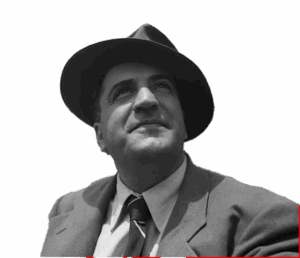
The theme of The Other culminates as the intersecting point of different investigations. The short story “Myself upon the Earth” provided our research the occasion to study and analyze the author’s writing ego from different perspectives. It demonstrated how the ensemble of the variations expressed by the “Self” unfolded itself in different circumstances. At this stage of our analyses, the self was taken in the realm of “I is I” as a starting point in understanding and interpreting a text. But, the self as self, is not an isolated independent entity and it cannot be. It evolves in a social framework and is confronted to the Other of the self that exists outside him; and is in a mutual, permanent interaction. The co-existence of both of these entities take different aspects; there is the Other outside the self, there is the Other inside the self, with its proper interior functioning. The interpretation studies the relationship of characters with respect to each other in Saroyan fiction; and their outlook to the society at large.
Volume III, Chapter Ten:
Time’s peregrination in Saroyan’s Narration
“In one degree or another all my writing marks the passing time.” [W.S. “Pebbles on the Beach”]
On the basis of what adequate grounds is the study of time and narration supposed to be undertaken? What legitimate reason is there to argue for such a questioning? These problematics are premises that the research will elaborate and attempt to answer. All Saroyan writings (as any) are based on a system of temporal signs: The three tenses, instants, moments, durations, while, and then, next, time moments, intervals. The method undertaken of our investigation will be involved in intelligibility brought to light by the process of schematization. Hence, the concept of time will be dealt both as theoretical approach and time in writing; cosmic time, traced by movements of planets in the universe; time studied by astrophysicists; time indicated by hands of Big Ben. On the other hand interior time experienced and mediated by the writer in his writings. The principal theses of this research concerns speculations of time, even if it deals with theoretical issues, is intended to show how time evolves and reveals itself in the narrative activity of the writer: Circle of narrativity and temporality. Art replies to contemplations on time with a poetic making that clarifies certain points without appealing to theoretical discourse. The coming pages will discuss how Saroyan deals with the issue of time from different angles. Thinking about writer’s relationship to time, the predominant feature to underline: Each word written is a recorded moment, a step in continuity of time towards a destination: the finitude of writer’s being. In Saroyan’s point of view, there is nothing more profound than intimations of his own mortality. His writing is a constant reference to awareness of the flux of passing time. Consequently, the research will investigate three dimensional relationships: time, consciousness, writing and the ensemble advancing towards non-being. According to phenomenological conception, time is a self-evident internal consciousness. If the subject is taken on the level of writing, according to the same philosophy, flow of consciousness has not only the consciousness of intuitive time, but that of chronological universal time. Through the short story, “Yea & Amen”, time and clock correlation are studied in the framework of the concept of a broken alarm clock. The contributions of other thinkers on the issue are solicited on this intriguing issue.
Volume IV, Chapter Eleven:
Discursive Treatise on his Obituaries
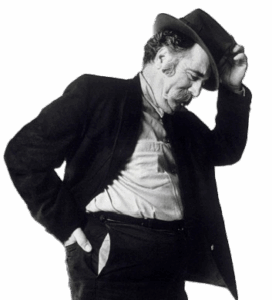
The very title of his book, Obituaries, and the literary style adopted are significant. In his conflicting encounter with death, Saroyan just asserts that his self is aware of the nearing contingency of death. In Obituaries Saroyan writes others’ obituaries such that he “disregards” in his subconscious the dreadful moment of his own death announced by others. Obituaries marks an exceptional moment in Saroyan’s literary history. It’s the “Last” act of the showman writer who is aware that there will not be curtain calls, but he has not yet left the stage. He is still acting, being there, and his energetic presence on stage attracts the curious attention of readers and spectators. Nonetheless, the actor is conscious that he is performing in a One Act Play where there is only One Entry and One Exit. Saroyan questions abruptly: “Why is death so much more than non-death, or being, or life, which we have struggled with as with totality? Why is that totality so much less than the unknown and very possibly totally unreal totality of the very absence of even a part, let alone a possible total.” In point of fact, Saroyan questions the ontology of death – that non-being takes greater dimension than being alive. He questions what has always been his approach to that of “totality”; then, he makes a parallel between the notion of “totality” and that of “the unknown.” The present endeavor taken in Heideggerian terms is a discourse involved in the articulation of intelligibility. This underlies an interpretation closely associated with “meaning.” Hence, all reflections are structured around an articulation are designed as the Heideggerian “totality-of-significations” (Bedeutungsganze), put into words which can be dissected into significations. Another factor is the discourse; that is, language “existentially” has its roots in the Dasein’s disclosedness, and it has its authentic kind of Being-in-the-world. For Saroyan, writing signifies being; nonetheless, he will confront the threshold of death since existents are doomed to the mortality parade. In Obituaries the writer labors his language, the over signification burdens his Word, it rushes headlong into death and takes the risk of the absolute lose of meaning. The meaning the writer is looking after is concealed; to comprehend the perspective of Be-coming is to lose meaning by finding it. Negation is inscribed in the lexicon and syntax of the writer’s language; a reaction to predestined futility of the end of his time. The writer’s conflicting self, the clash with nothingness in negating: it is a must that will reveal his authentic being. This antagonism expressed through writing transcends all syntax and logic. Language is not an ensemble of words; it is syntax arranged that gives meaning. Their lies the organic relationship between language and thought; consequently, it is language that “rationally” thinks death. The writer experiences death in language although the real experience happens only once and outside language. Saroyan has labored his language, the over signification burdens his Word, it rushes headlong into death and takes the risk of the absolute lose of meaning. The meaning the writer is looking after is concealed; to comprehend the perspective of Be-coming is to lose meaning by finding it. Negation is inscribed in the lexicon and syntax of the writer’s language; a reaction to predestined futility of the end of his time.
Volume IV, Chapter Twelve:
The Instant of “final finality”
In terms of the present research, “final finality” is taken as the space of finitude in which the dying writer is found. Hence, “finality” marks the passage from the virtual concept of death experienced or projected in writing; to matter in fact reality of approaching death. The research arbitrarily designates this period as the critical moment of the intensification of the death torment in the consciousness with the approaching finitude, in this period, the dying writer enters into the space of no man’s land; that of momentary “non-dead.” Or, can this instant of Finality be thought? How can death be thought when it signifies the end of all meaning? Nonetheless, Saroyan in his manner reflects about immortality in a very insisting manner. The ever daring young man himself declared his obituary to San Francisco office of the Associated Press: “Everybody has got to die, but I have always believed an exception would be made in my case. Now what?” The singular exception is himself. The research analyses in what way this crucial existential moment of finality is associated to writer’s overall outlook to Time, Being and Writing. The research follows step by step all the stages of the writer’s existential time heading towards his “…final finality…” The expression is Saroyan’s, from his autobiographical interlude Not Dying.
Hagop Papazian
Editor’s Note
Behold the first of four volumes analyzing the literature of one of the twentieth century’s undisputed master storyteller, novelist and playwright. William Saroyan wrote in a deceptively simple style. Yet upon close inspection, his readers find various coherent themes touching upon many profound questions about life and death, war and peace, the significance of man’s time on earth — and the concept of time itself.
This scholarly publication represents the life’s work of its author, Hagop Papazian. Born in Beirut, Lebanon, he moved to Paris in 1977. Dr. Papazian earned a PhD and other advanced degrees from the Sorbonne. He has written and lectured extensively about Saroyan.
In engaging in the editorship of these four volumes, I encountered an author (who prefers to describe himself as “researcher”) with a multicultural identity: Armenian, Lebanese, Arabic, and remnants of Anatolian roots. His studies at the American University of Beirut, his love of American literature and avant garde painting are an indivisible part of his intellectual and artistic individuality. Educated in Western thought and a polyglot, Dr. Papazian has been living in Paris for more than four decades; he is deeply immersed in French culture. Since his studies at the Sorbonne were undertaken in French, Gallic syntax often competes with his fluent command of English on many points — challenging us to put some of his abstract thoughts into the intended linguistic context.
As Dr. Papazian explains, his “discourse on the discourse” is not based on pronouncing critical literary generalities. His methodology fragments each sentence and term. His analysis, layer after layer of the text, discloses hidden significance beyond language. This gives new apprehension to the literary output of Saroyan, by the deciphering of concerned signs. It focuses on sound logical argument to affirm his interpretation.
Complementing the text is an array of arts and sciences. The researcher notices on writer’s special relationship to light and his passionate love of the sun. Consequently his involvement in plastic arts painting and drawing that goes in parallel to his improvised experimental writing.
As this work reveals, Saroyan also found great meaning in music, from the orchestral to a jazzy improvisation and musicality of his writing. His outlook on the world and his quest for a great cosmic vision in its sacred dimension are found in the framework of his narrations.
Saroyan, belongs to the category of writers who comment on their own writing, on writing in general, on language, and the writer himself. His love of language transforms him into a poet, even while writing prose. His prose poem are particularly authentic. His full mastery of language will produce singular aporias. He extends an invitation to the reader to give his own reasonable interpretation of his work. In this respect, “the researcher” insists that “the writer” (Saroyan) “thinks” language, and language “thinks” him — confirming that thought is timeless. Not to mention his conception that there is nothing not worth writing — and that very act is infinite.
Another running theme in the Saroyan canon is the place of the first-person “I” in his writing; subsequently, Saroyan associates the self, the ego and the catalytic relationship to writing. Not to mention, his epistemological world outlook; truth is subjective. In the spirit of Walt Whiteman, it is a celebration of the self and of the United States as essentially the greatest of all poems.
This work explores how Saroyan’s personal encounter with the death of his father becomes the source of his existential relationship to Being and Death placed in a metaphysical framework. It is the major trauma of human existence. What follows is the logical relationship between Being and Time. He discourses on the reciprocal relationship of time and death, and of how to get even with death through writing. All along the research the triad will assume: The act of writing is praxis of Being. He engages in a youthful determination of The Daring Young Man to build his vocation as a writer, and his permanent involvement in the Word/World relationship. Parallel to these factors, he thinks about notions of immortality, eternity, Augustine’s permanent present, and infinity in the time-space relationship.
The son of a Presbyterian pastor, Saroyan inherits the love of reading the Bible. He takes on the paradox of God through a discourse on God-Man relationship — and how these factors find their expression in his characters and their relationship to their world outlook. How the language of the Bible, the fable form of storytelling, influences the writer’s language and style.
Saroyan is representative writer of the Great Depression. He points out and nominates those responsible for that systemic catastrophe. The guilt, shamelessly falls on Wall Street, where the end of a nation is declared. His short stories penetrate the tragedy of that period. His writings express the suffering of the poor exploited classes and the marginal characters who tried to survive those desperate times.
In these ongoing series of tensions and social conflicts, he inspires hope and optimism for the future. Hence, the necessity for social change where he encounters socialist and communist principles. He clearly designates his place with respect to ideologies and politics, seduced by the ethic of individualism and commitment, firmly affirms his writer’s status and his responsibilities in that respect; writing becomes his social activism.
Saroyan is considered the protagonist of minorities’ literature. He was firmly attached to his origins, his Armenian-American identity, altogether with a Universalist outlook in relation to his writing which he considered his home. An example: In Saroyan’s Aram Short Stories, his mad and big-mouthed uncles challenge the universal forces through their naïve outlook, and keep on laughing at the big ideas of the world.
In what manner his writing apprehends reality? In the introduction to his play, Sam Ego’s House, he declares that he is a product of Asia Minor; hence, the allegorical and the real are closely related in his mind. Hence, the importance of metaphor, myth and fable in his writing.
Dr. Papazian’s approach has its basis in the principal notion of totality. In literary terms, he follows Young Saroyan from his earliest stories in Overland Monthly, passing through the epiphanic manifest progress of his works. The researcher studies major periods of his literary development all the way through to the writer’s “…Instant of Final Finality…” At that crucial moment, the writer accepts his destiny; death is no more a virtuality in writing, it is the Reality of his Being waiting next door: The ultimate confrontation is on the point of taking place. Nevertheless with great humor he posits that, he never “believed” in his death; if that ever happens. And certainly an exception would be made in his case?
The researcher’s methodology of “reading” and decoding an extensive catalogue through a “discourse on the discourse,” and through the prism of Western critical schools, assigns an esteem of Saroyan’s literature otherwise neglected by modern Anglo-Saxon critics.
The interpretations herein are not formulated as established statements, but justified by the researcher’s theoretical elaborations. In this respect, his concepts become an invitation to open dialogue for a deeper understanding of Saroyan’s multi-dimensional work, and offer a new manner of reading the writer’s literary output.
Dr. Papazian dedicated decades of meticulous scholarship to produce this unprecedented treatise linking Saroyan’s worldview to the greatest thinkers in human history. Of course, no academic work can ever truly be called final. There will always be room for others to critique and continue the efforts initiated here. That additional examination is welcomed.
While these chapters are meant to be read in order, they can also serve as stand-alone references. To that end, each chapter has its own table of contents, and every volume has an independent index. A comprehensive bibliography for the entire four volumes is found at the end of Volume Four.
Terry Phillips, managing editor
Hye Books: Eleftheria